
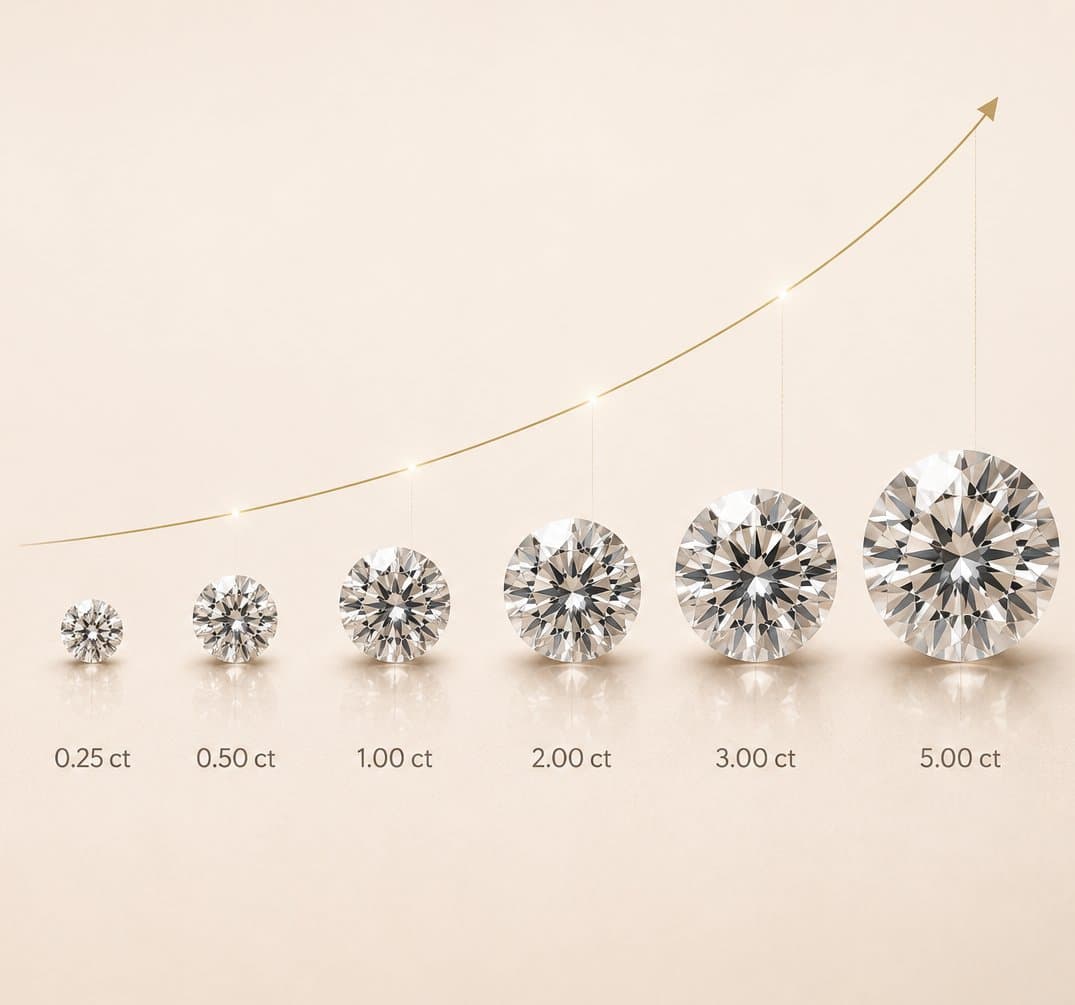
LIDYA Diamond Selection
Carat (Weight)
Weight is one of the most significant factors affecting price. As carat weight increases, price per carat often rises as well because larger diamonds are rarer.
Precision · Rarity · Confidence

A diamond's value is shaped by the Four Cs plus several additional factors. Every stone we offer is independently certified — worn as jewellery, or held loose as a private, portable store of value.
Beauty catches the eye. Quality withstands scrutiny.
A fine diamond is more than brilliance alone. Proportion, grading, rarity and certification all contribute to its character and long-term value.
Weight is one of the most significant factors affecting price. As carat weight increases, price per carat often rises as well because larger diamonds are rarer.
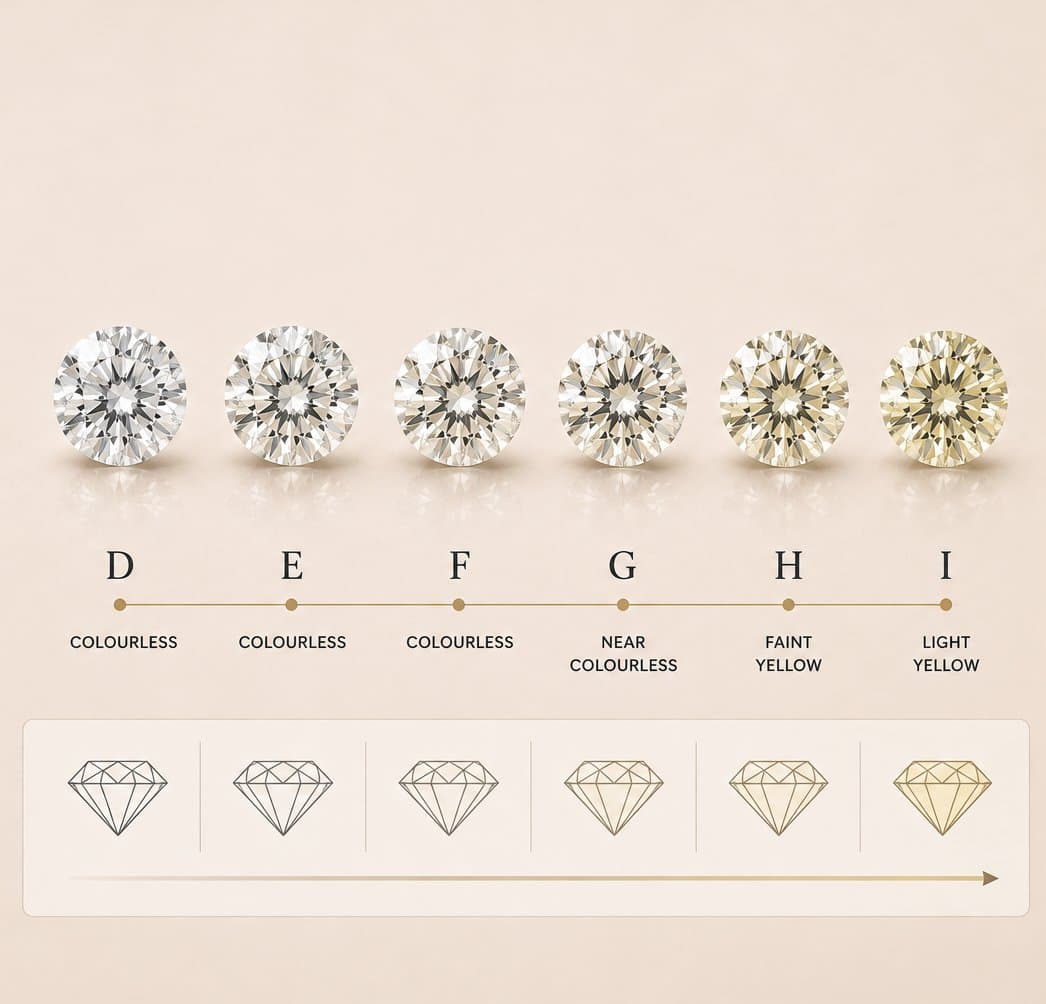
For diamonds in the normal D–Z colour range, less visible colour generally means a higher grade. D–F diamonds are classified as colourless.
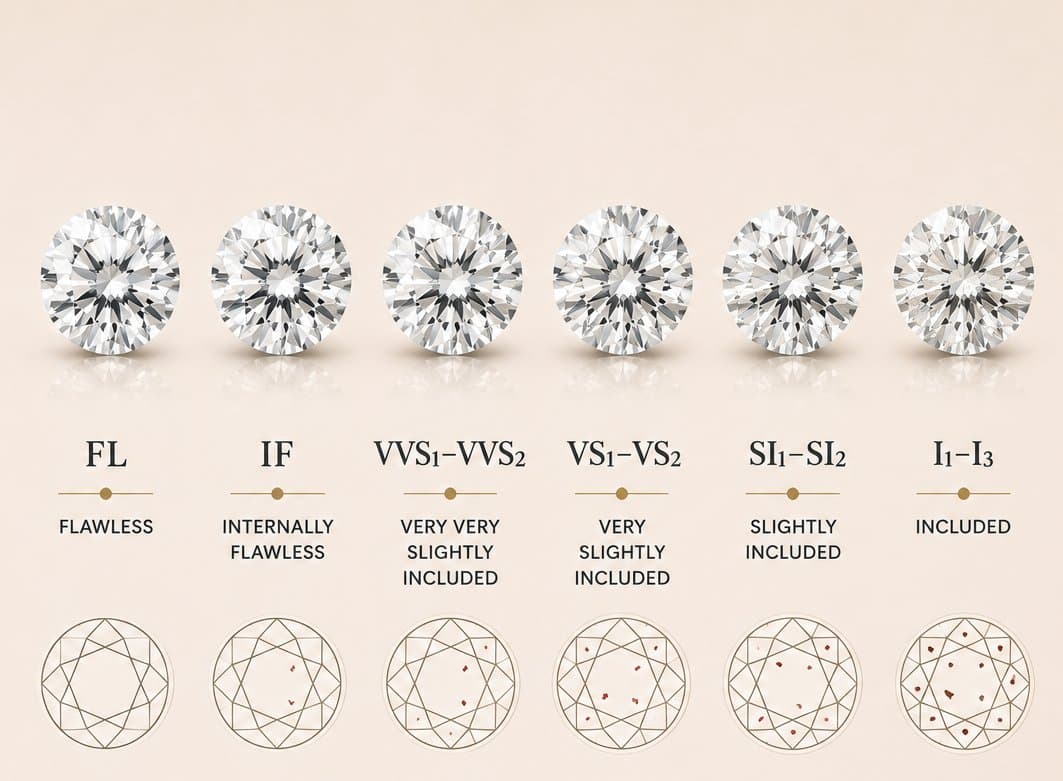
Clarity evaluates internal inclusions and surface characteristics. Grading is performed under 10x magnification, with fewer and less noticeable characteristics receiving higher grades.
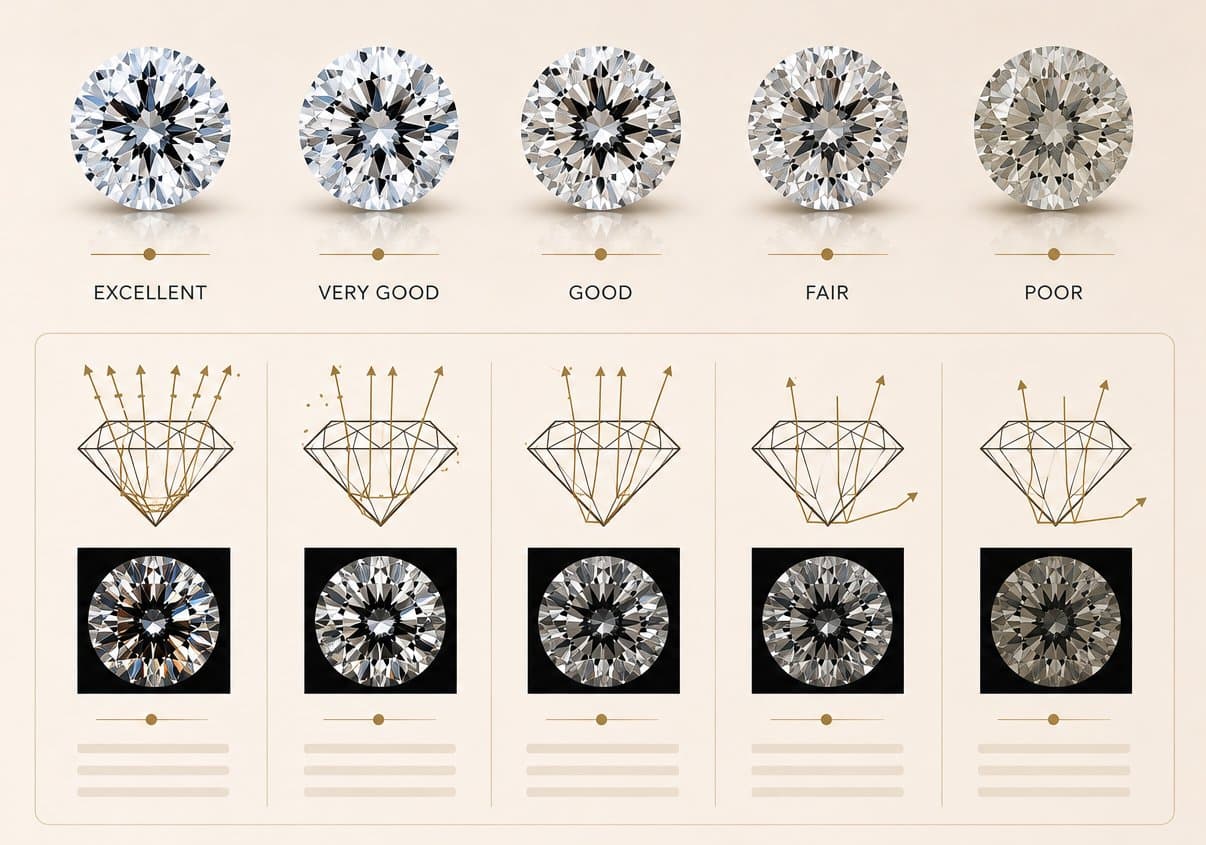
Cut quality strongly influences a diamond's brightness, fire and scintillation. Unlike the other Cs, it is shaped by human craftsmanship.
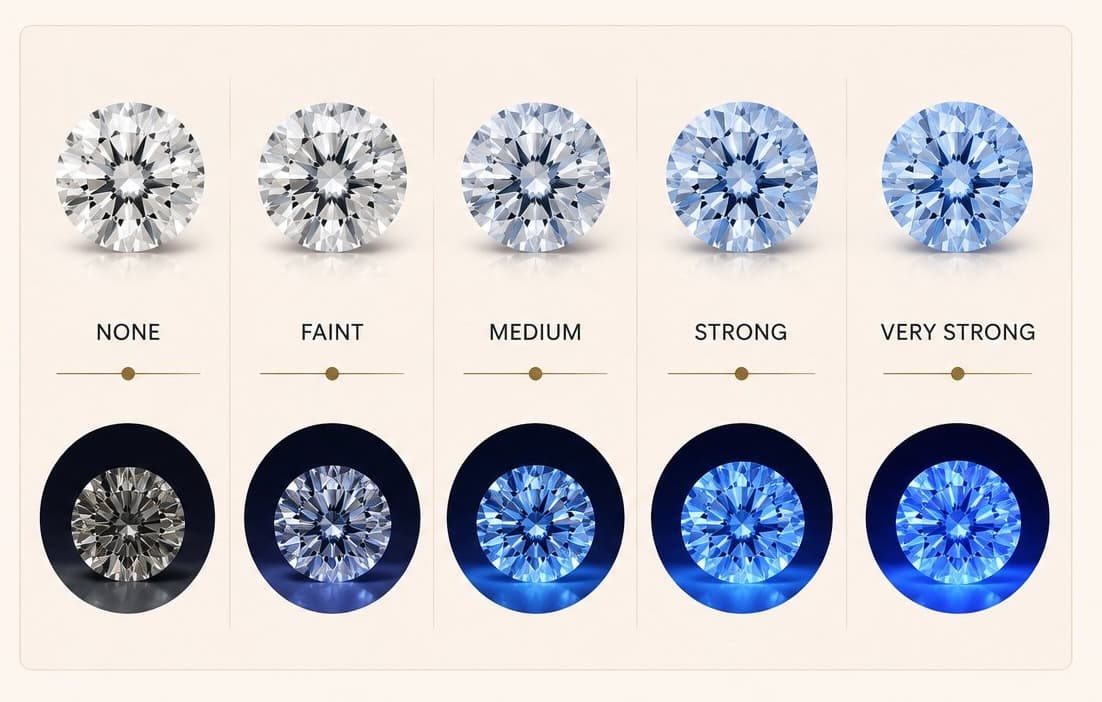
Some diamonds fluoresce under ultraviolet light, often appearing blue. Its effect on appearance and price depends on the individual stone, colour grade and fluorescence strength.
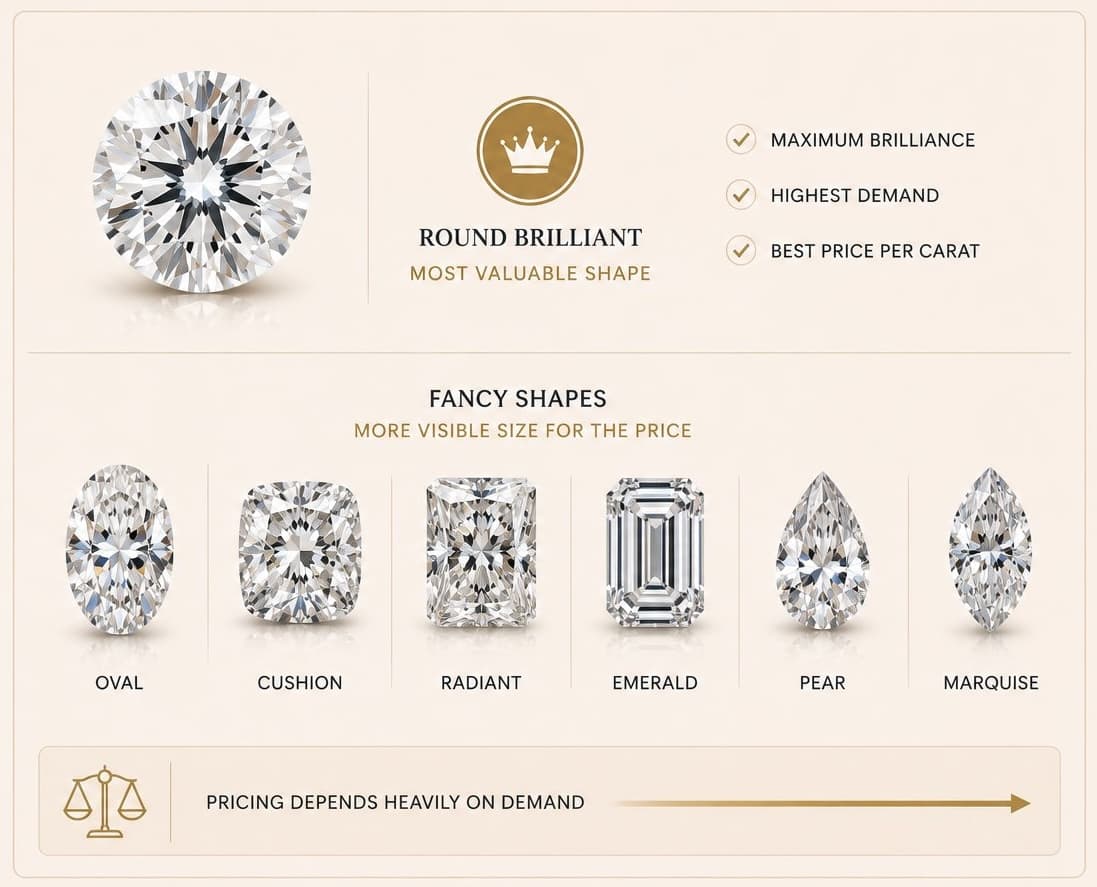
Round brilliant diamonds generally command strong market demand. Fancy shapes may offer a larger visible spread for the same carat weight, while pricing varies by shape, proportions and demand.
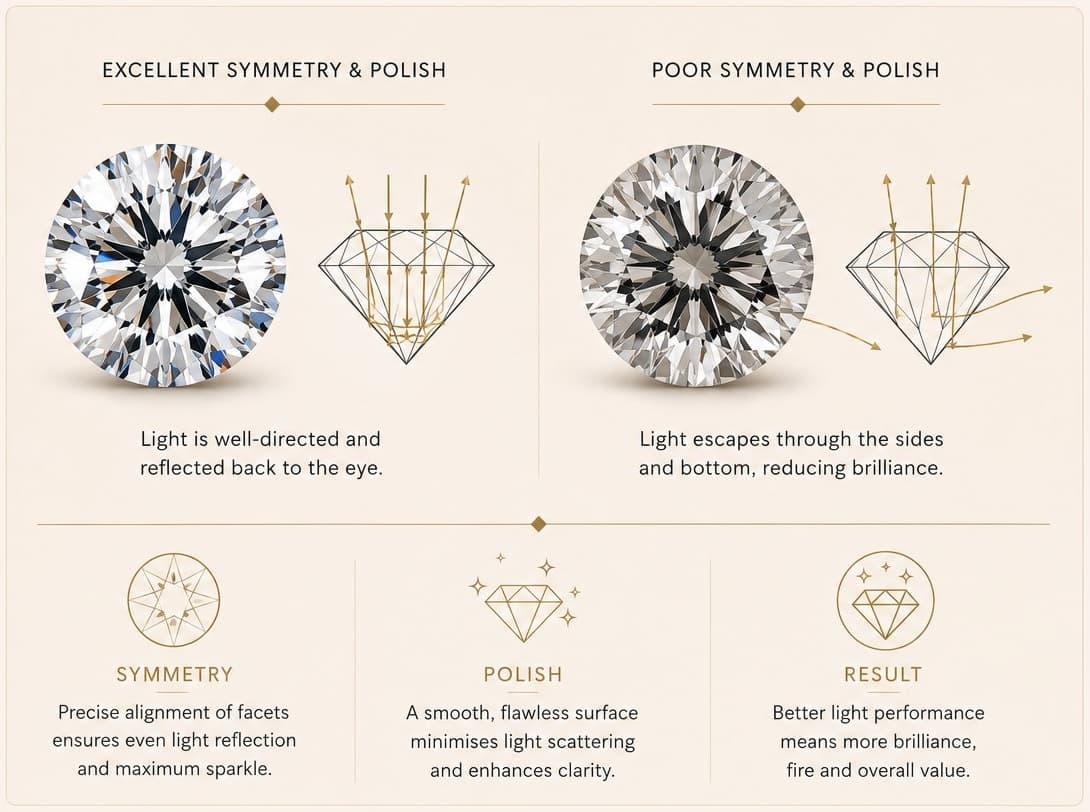
Strong symmetry and high-quality polish support a diamond's visual performance and are recorded as separate grading characteristics on many laboratory reports.
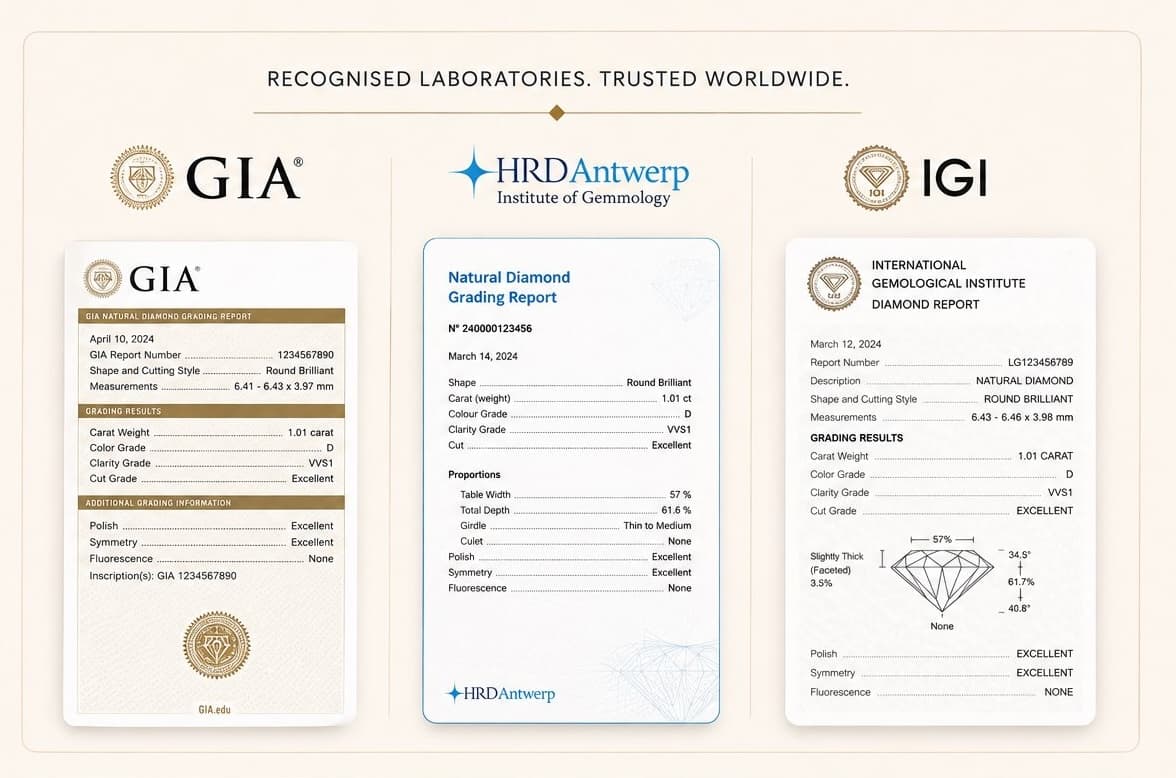
A grading report from a recognised independent laboratory such as GIA, HRD Antwerp or IGI provides independently assessed characteristics that can support verification and comparison.
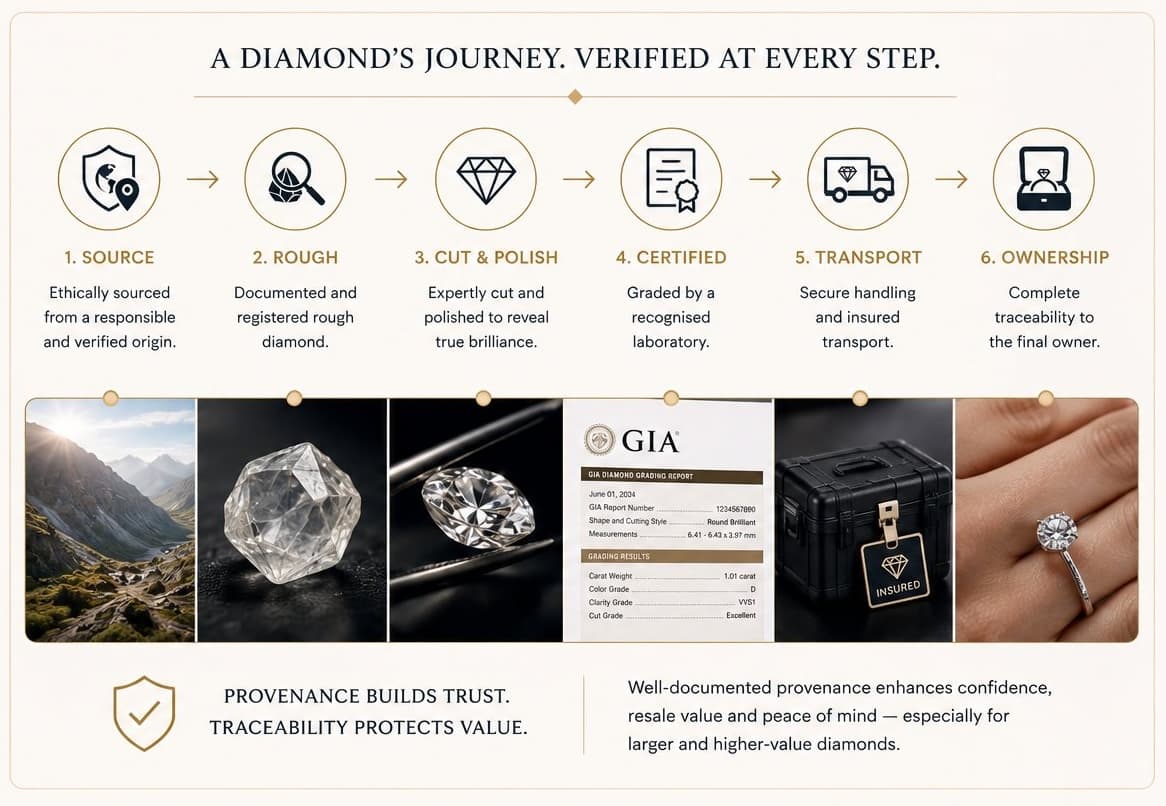
Documented provenance can add useful traceability and context to a diamond, especially where origin and sourcing information are important to the buyer.
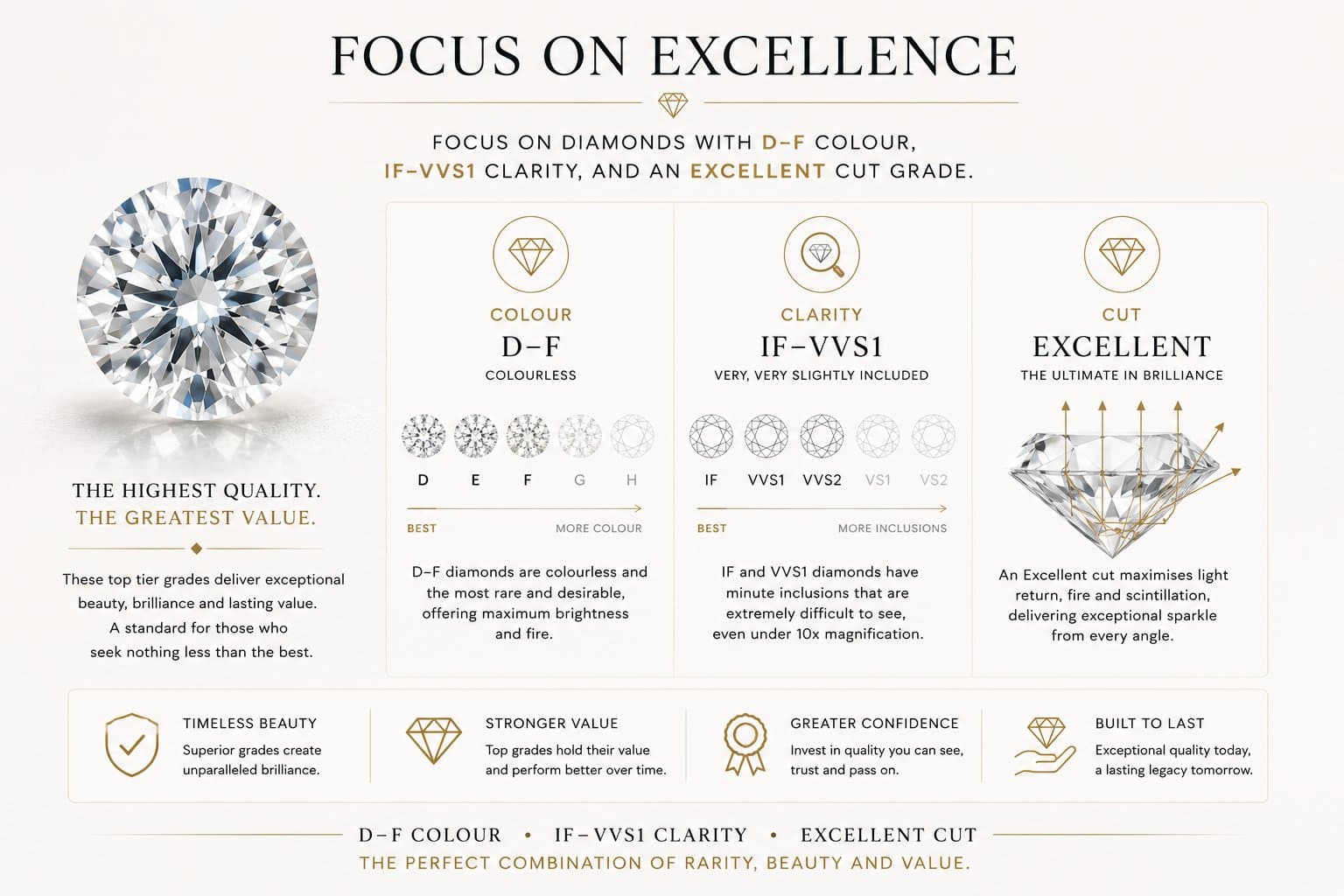
For buyers seeking premium characteristics, D–F colour, IF–VVS clarity ranges and Excellent cut grades are among the specifications commonly considered.
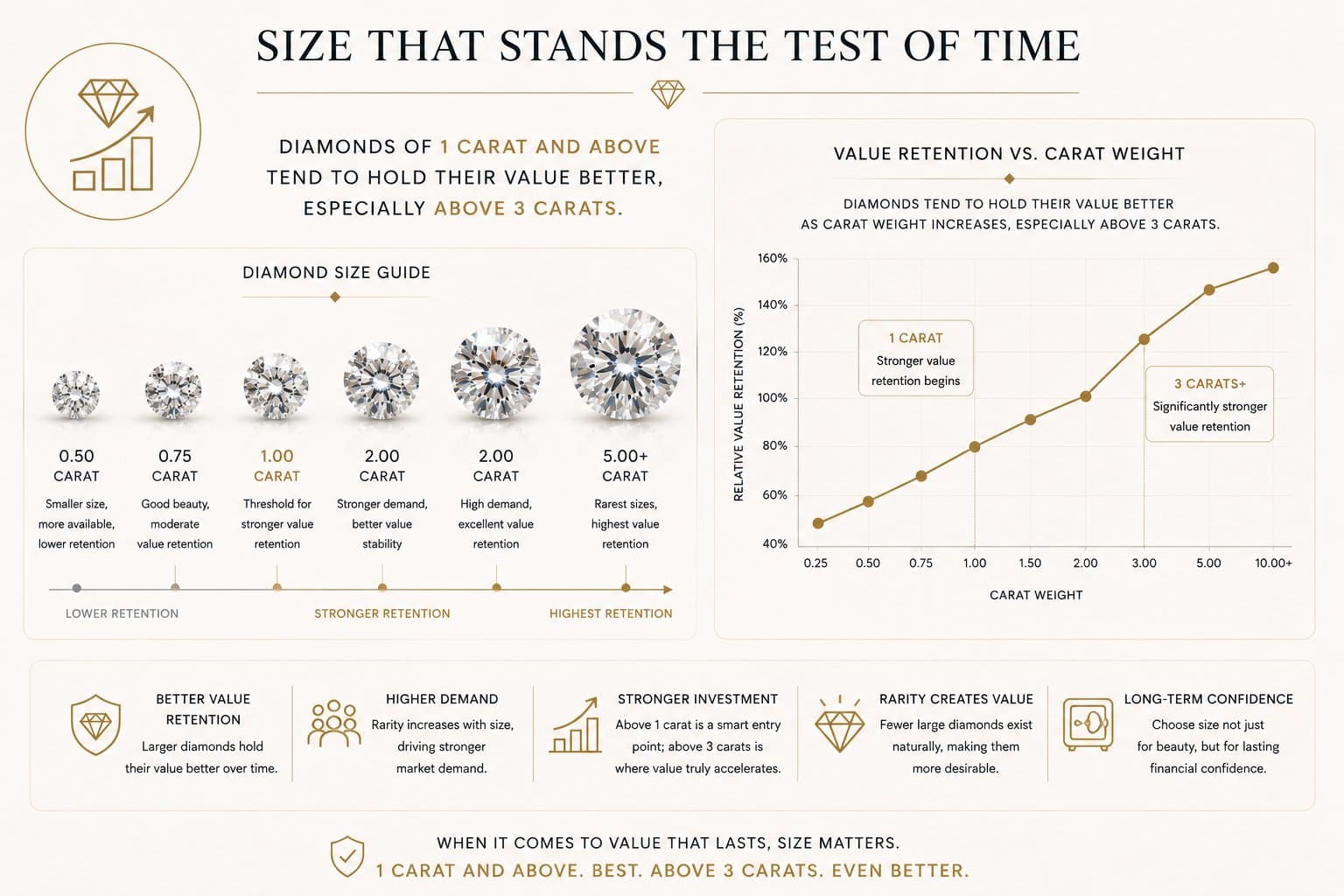
Larger diamonds are rarer, and significant carat thresholds can affect pricing. Resale performance, however, depends on the complete specification, market demand and transaction conditions.

An internationally recognised independent grading report makes a diamond's stated characteristics easier to verify and compare.
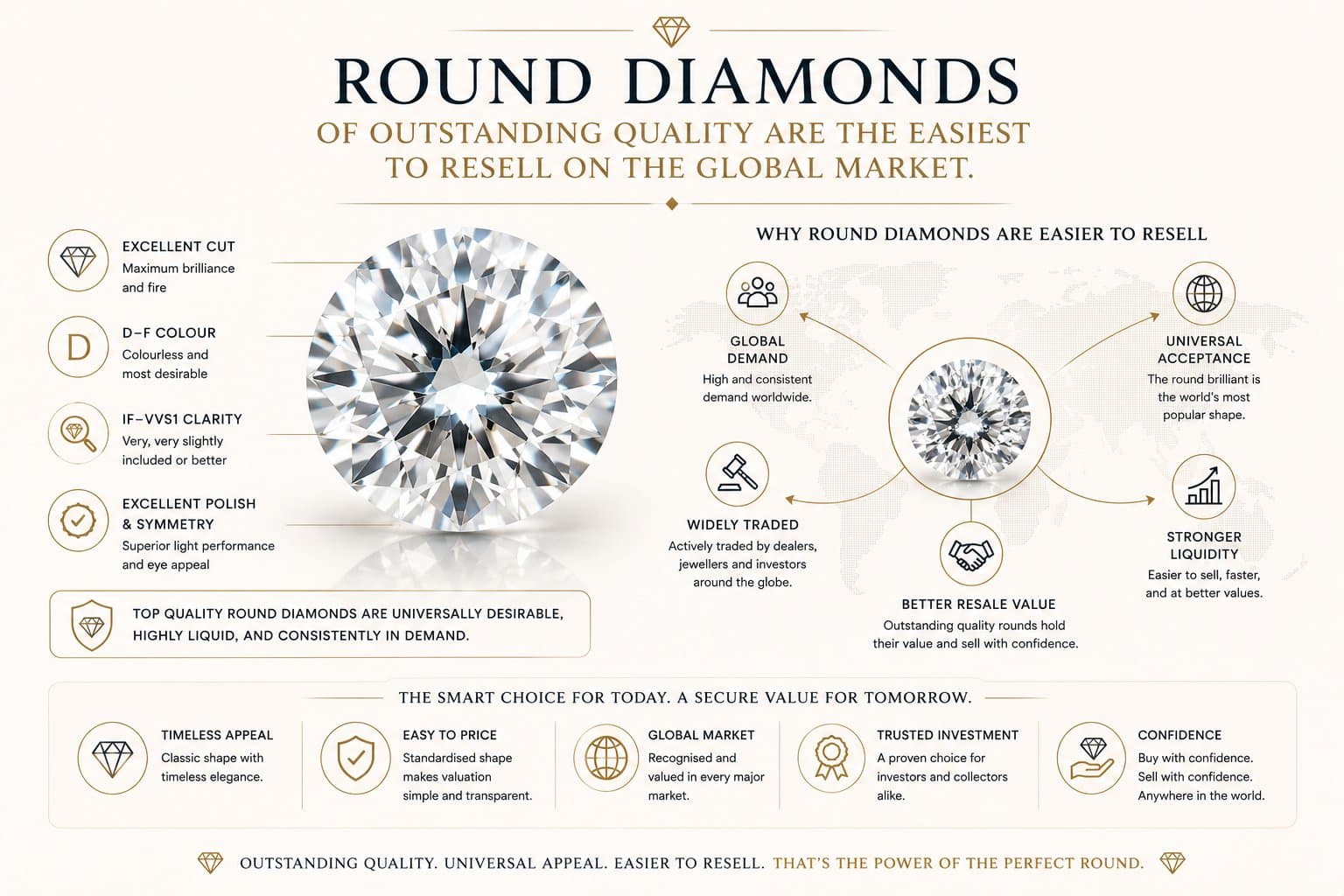
Standardised, widely recognised specifications can make a diamond easier to compare in the secondary market, although diamonds are generally less liquid than exchange-traded financial assets.
Certification, transparency and independent grading provide the foundation for informed diamond selection.
Independent grading documents the measurable characteristics of the stone.
Clear documentation supports confidence in origin, identity and quality.
Numbers matter, but final selection still depends on expert human judgement.
Brilliance attracts attention. Confidence comes from knowledge.
Diamond value = the 4Cs + additional factors
Premium characteristics = high quality + suitable carat weight
Independent certification supports verification and comparison
The diamond market is global, but not fully standardised
Diamonds are tangible assets with individual characteristics
Every stone we offer is independently certified. Book a private appointment to discuss current availability, certification and pricing.
Some pieces are chosen. Others simply feel meant for you.
Choose your contact